
When Hydrogen is the wrong answer
Headless is a cost, not a feature. Here is the checklist we use to decide, and when we tell clients to stay on Liquid.
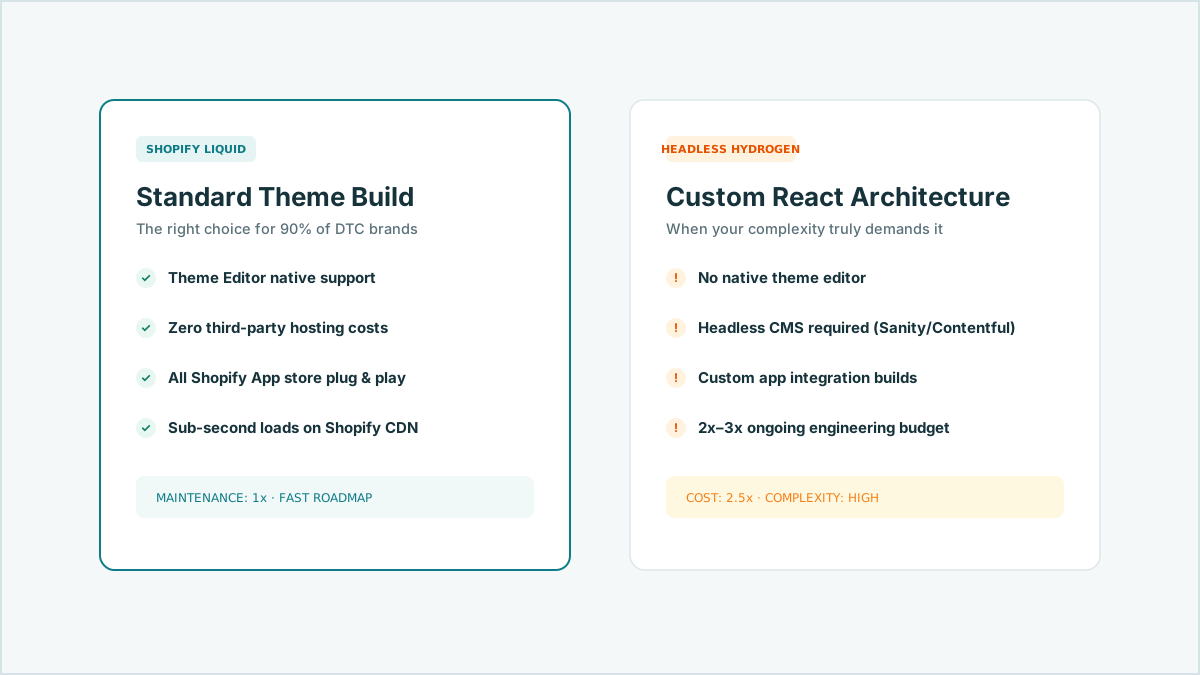
The honest cost of going headless
A Hydrogen build is not just the front end. You take on hosting, deploys, preview environments, a CMS, and every app integration that previously came free with the theme. Budget two to three times a comparable Liquid build, and an ongoing developer relationship — because your marketing team can no longer change a section in the theme editor.
Reasons that justify it
Content-heavy commerce where the CMS drives most pages. Multi-brand or multi-region storefronts sharing one catalogue. An existing React application that the store has to live inside. Genuinely custom interactions that Liquid cannot express. If your reason is not on that list, it probably is not a reason yet.
Reasons that do not
'Our site is slow' is a theme problem nine times out of ten, and a well-built Liquid theme on Shopify's CDN is very fast. 'Headless is modern' is not a business case. 'Our agency recommended it' deserves a second opinion, ideally from someone who does not bill for the rebuild.
The middle path most brands should take
Keep Liquid for the storefront and go headless only where you need it — a custom configurator, a content hub, a B2B portal — using the Storefront API from that one surface. You get the flexibility where it pays and keep the theme editor everywhere else.
If you do go ahead
Decide the CMS before the framework, plan the preview and deploy workflow with your marketing team in the room, and write down which apps you are giving up. Every headless project we have rescued had the same root cause: nobody agreed in advance who would publish content and how.
Want this checked on your own store?
We'll run the same review on your storefront and send you the findings in three business days. Free, and yours to keep.
Get my free audit